Product strategy, UX, and full-stack build
INDEPENDENT AI FINANCE PRODUCT
Smart
Finance
I built Smart Finance for myself—and for other early-career professionals facing the same uncertainty around saving, investing, tax and what to do next.
SIGNAL
PROBLEM
DECISION
PRODUCT
LEARNING
— PROJECT SNAPSHOT
60-SECOND READ01 / THE PROBLEM
Early-career earners lack clear guidance on next steps from raw financial data
Prioritise contextual guidance over open-ended AI chat
Personal finance decision-support prototype
One moderated usability session
Working prototype; retention unvalidated
01
Signal
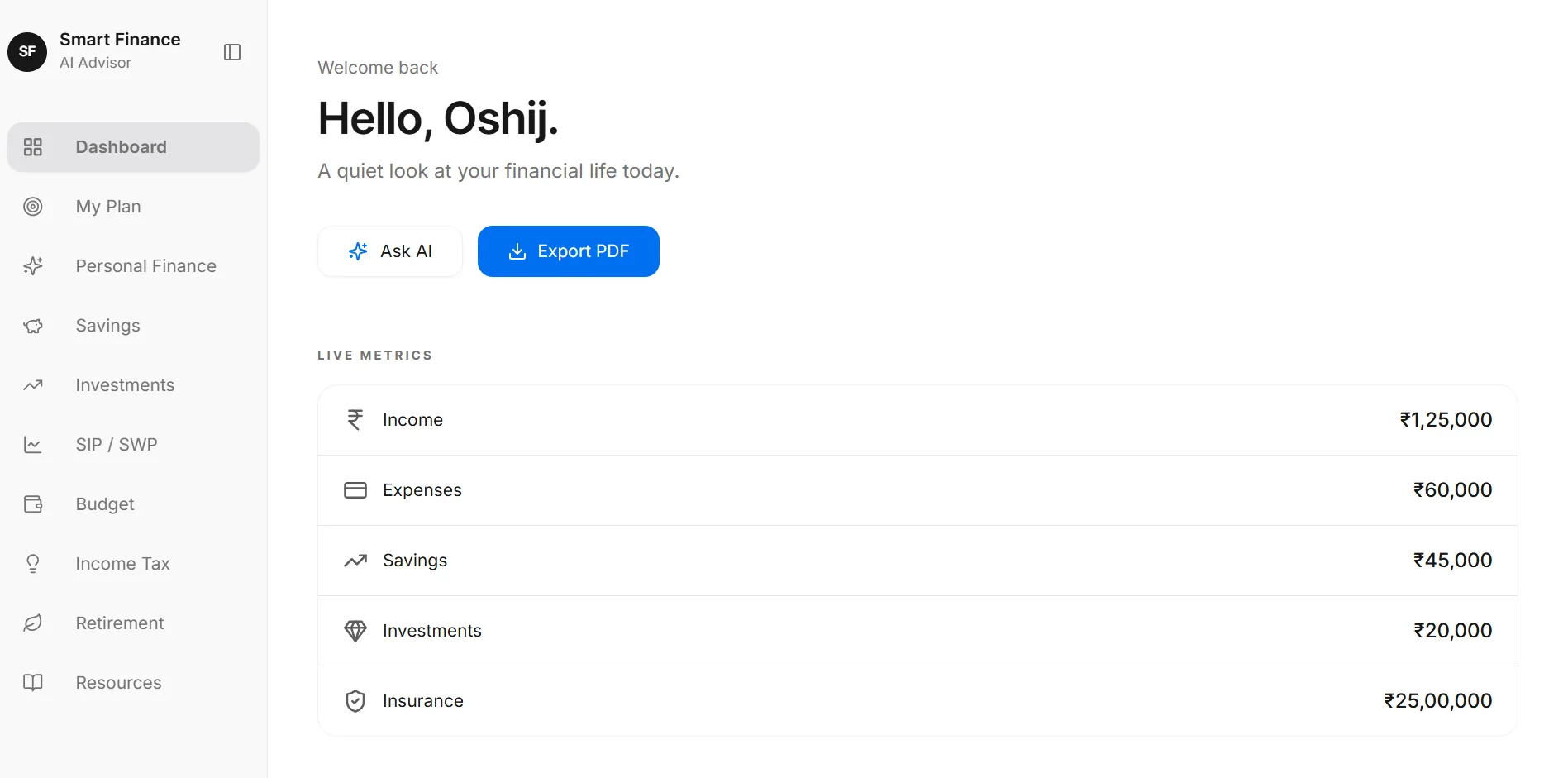
The project began with my own questions: I could see the numbers, but I still did not know which financial action should come first.
Information did not create confidence.
I had access to balances, transactions and general financial content, yet still wanted a clearer answer to what I should do first.
Move from tracking to guided action.
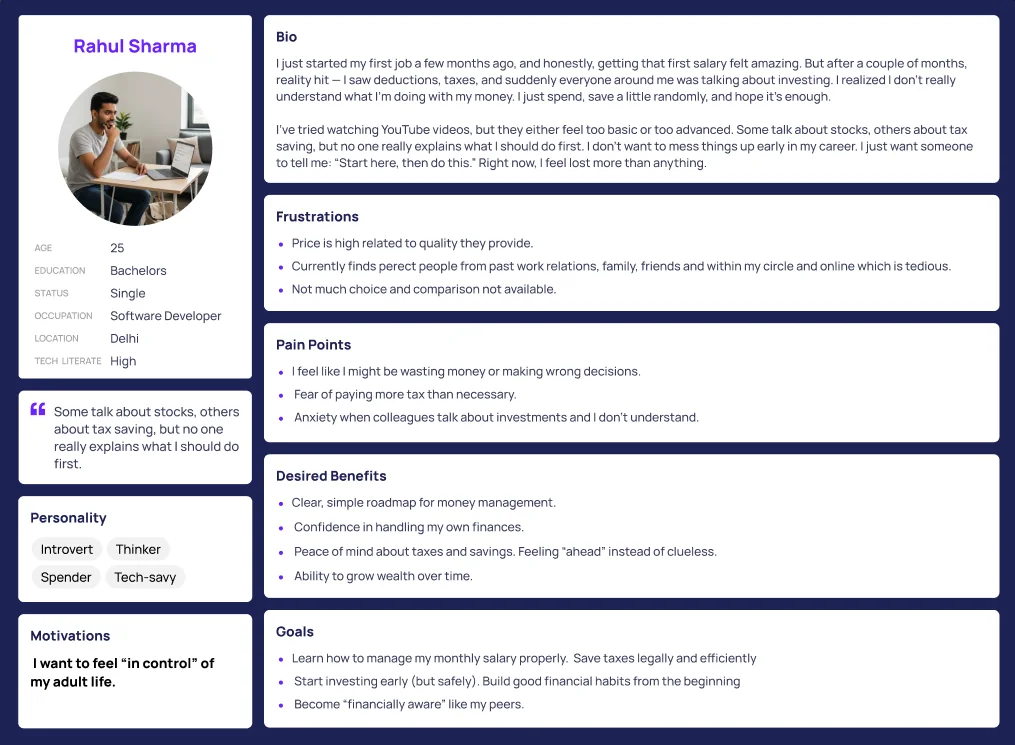
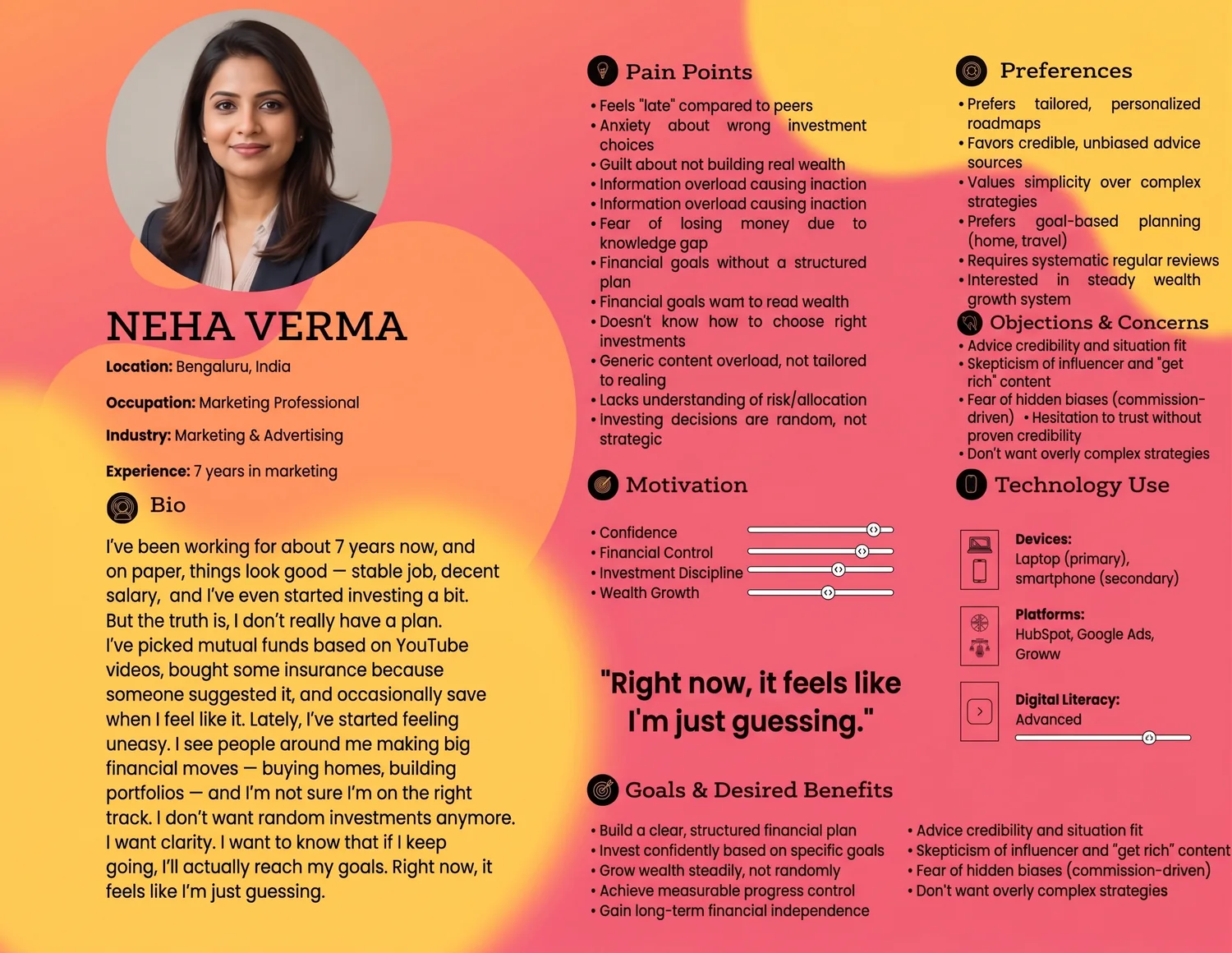
I shaped the product for other early-career professionals who also need plain-language context, one prioritized step and deeper tools only when useful.
02
Problem
Beginners needed a path to action without being asked to trust an unrestricted AI financial adviser.
REFINED PROBLEM STATEMENT
How might I help myself and other early-career professionals understand our current financial position and choose a sensible next step—while keeping recommendations bounded, explainable and clearly educational?
PRIMARY USERS
Me and other early-career professionals managing Indian personal-finance decisions.
CORE NEED
A unified view, a plain-language explanation and a prioritized action—not another list of disconnected numbers.
BOUNDARY
No brokerage, direct trading or regulated financial-advice claim. Inputs and outputs still require user judgment.
03
Decision
Three product choices narrowed the concept around comprehension, trust and action.
Guided conversation before dashboard.
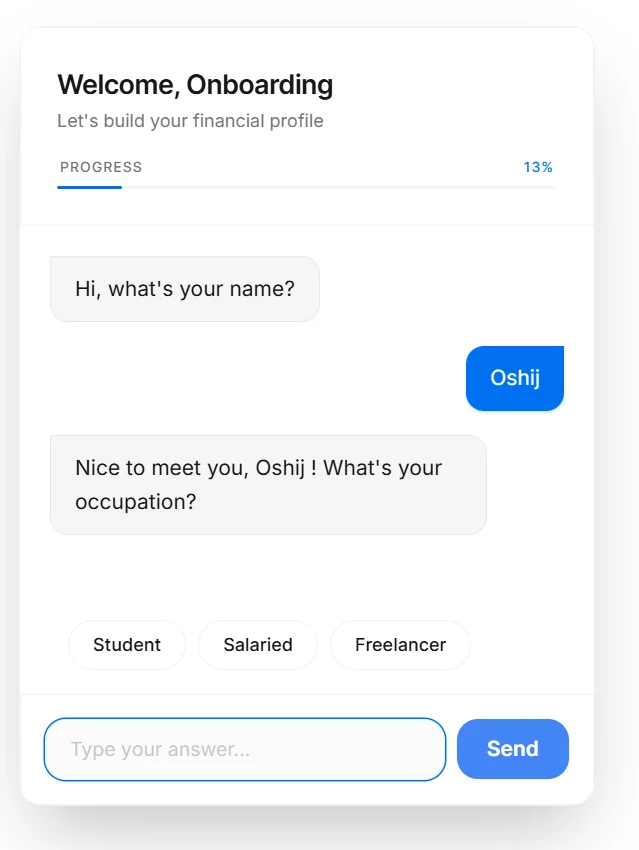
A blank dashboard assumes the user already knows which data matters. Conversational onboarding collects the financial context progressively and explains what is being asked.
CHOSEN · GUIDED ONBOARDINGPriority logic before open-ended chat.
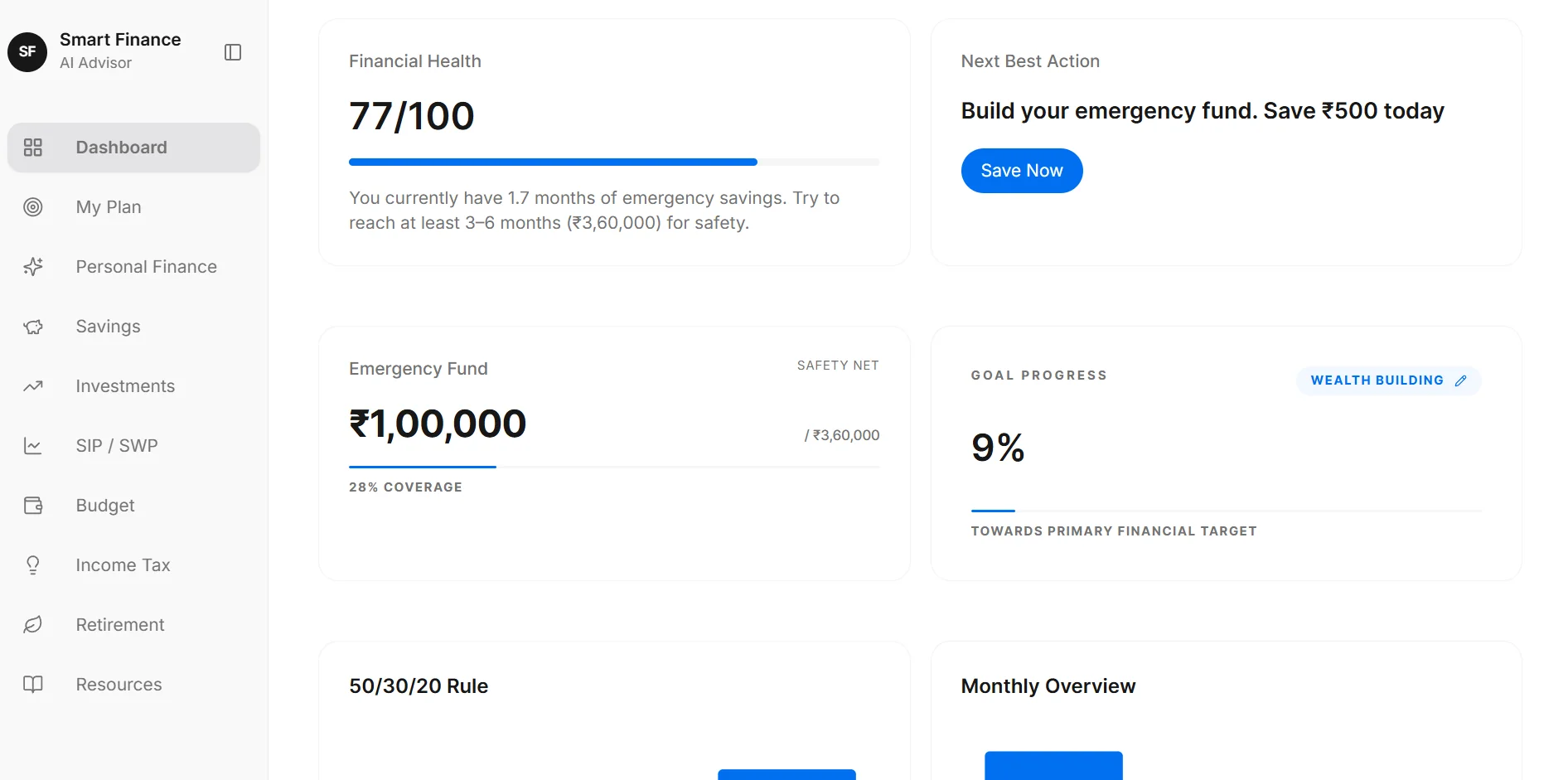
The dashboard calculates financial health and surfaces one “Next Best Action.” The AI Advisor remains available for explanation, rather than becoming the only path through the product.
CHOSEN · RULES + AI EXPLANATIONManual inputs before financial integrations.
The prototype uses information entered by the user instead of requesting bank or UPI access. This reduced privacy and integration risk while testing whether the guidance itself was useful.
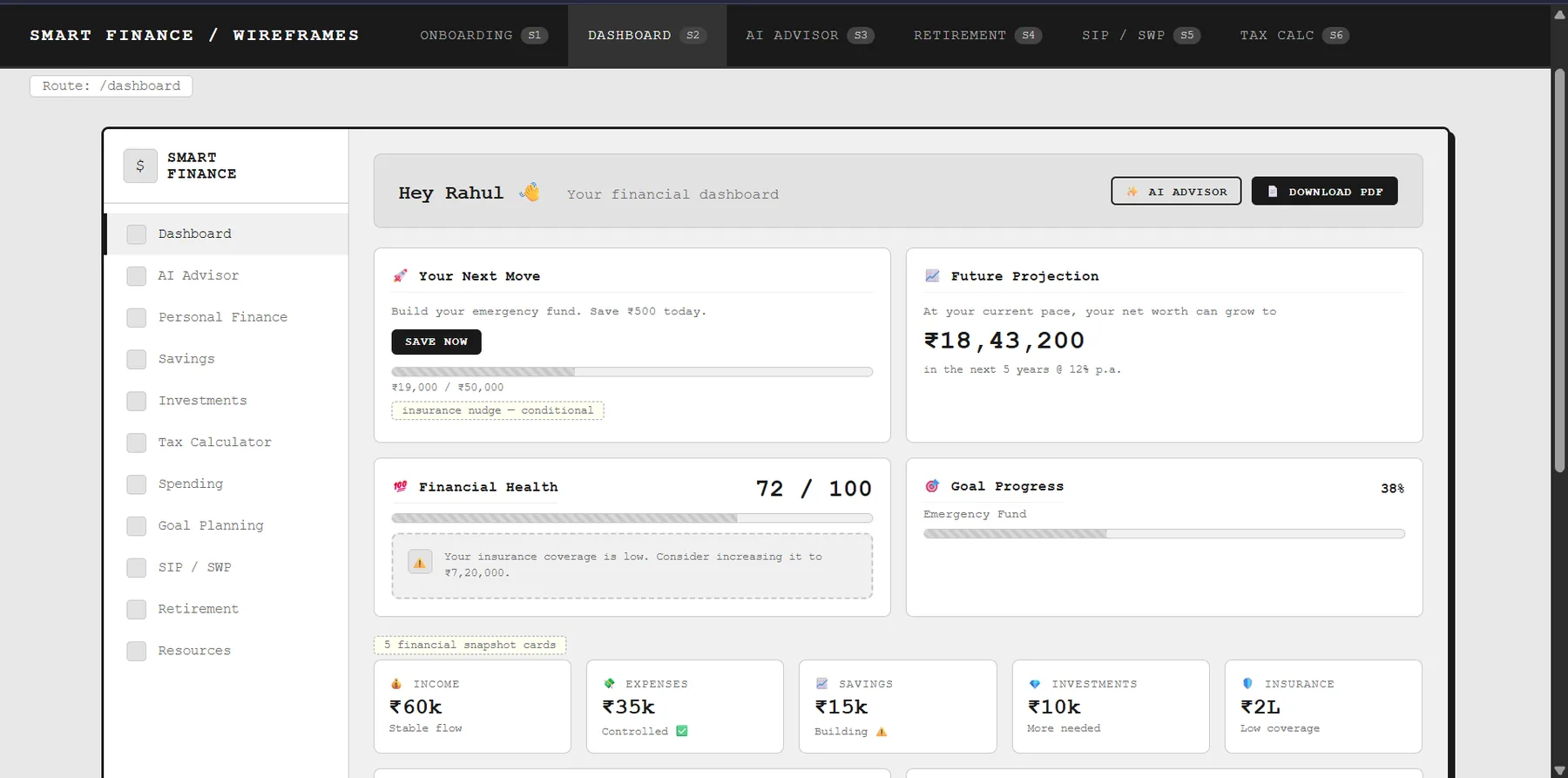
CHOSEN · INPUT-DRIVEN MVP— FIRST-RUN EXPERIENCE
Ask one understandable question at a time.
The onboarding flow builds a structured financial profile without exposing the user to a long form or an empty analytics screen.
04
Product
The working prototype connects onboarding, prioritized guidance, calculators and conversational explanation.
— PRODUCT SYSTEM
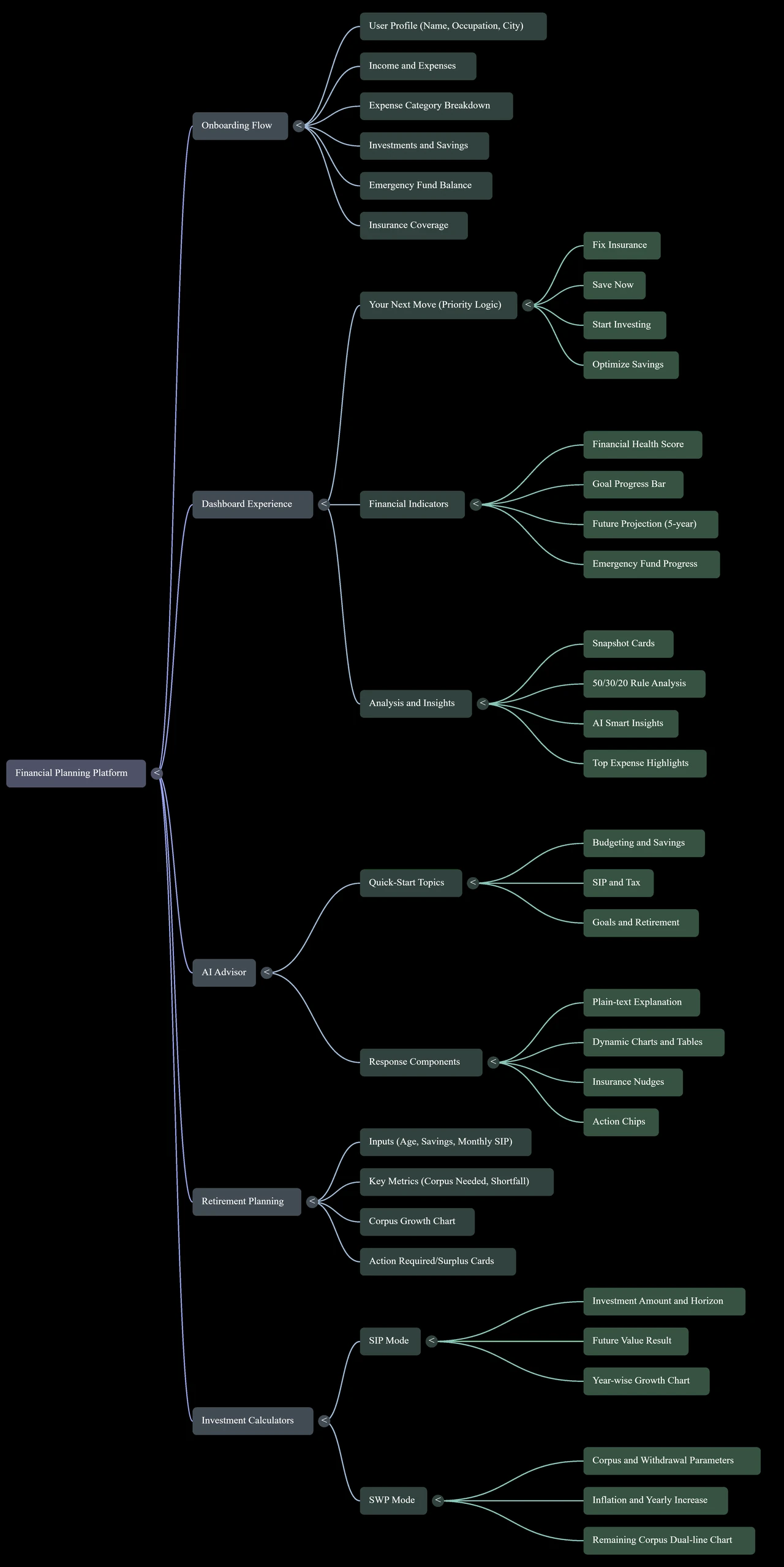
One product map, revealed at a readable scale.
Scroll through the four product areas. The map follows your position and focuses the relevant branch.
Onboarding
Capture profile, income, expenses, savings, investments, emergency funds and insurance progressively.
Dashboard
Translate inputs into a health score, financial indicators, goal progress and one priority action.
AI Advisor
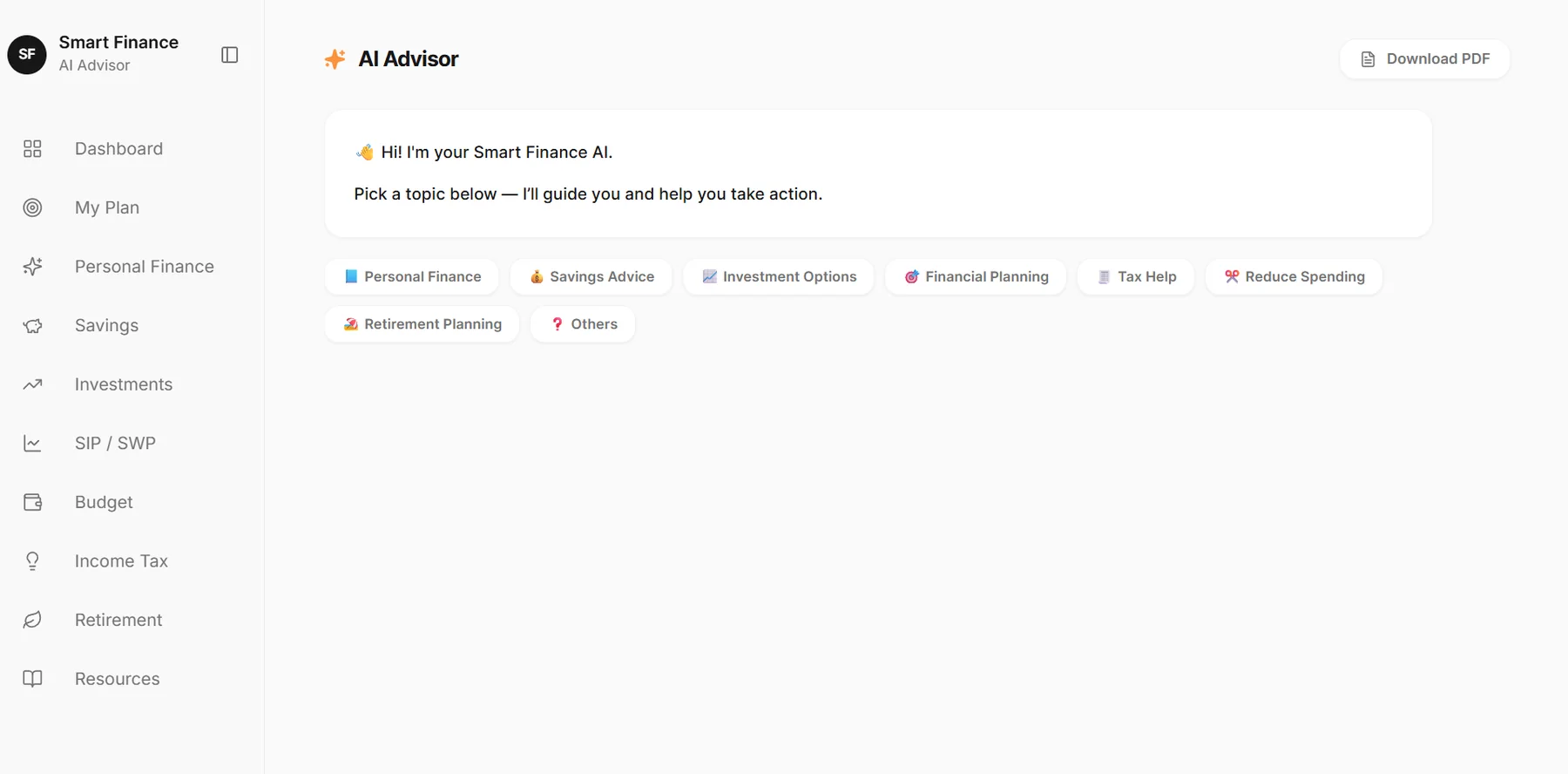
Offer topic-led explanations, structured response components and contextual prompts instead of a blank chat.
Planning tools
Support retirement, SIP, SWP, tax, savings and goal decisions with dedicated calculators and guidance.
FOCUS · OnboardingView full map
01Conversational input
02Financial rules
03Health score
04Next action
05AI explanation
06PDF plan
BUILT WITHReactTypeScriptRechartsExpressOpenAIjsPDFBrowser session stateVercel
— DOCUMENTS & EVIDENCE
Open the work behind Smart Finance.
The requirements and journey are available as readable PDFs and open only when selected.
05
Learning
One usability test exposed two concrete gaps; neither is presented as an implemented result.
USER TEST · 01 PARTICIPANT2actionable product changes identified
“Give me a simpler way to categorise expenses, and let me rate every AI response.”
Add a categorized manual expense-entry flow rather than depending on direct UPI integration. This can reduce fragile transaction mapping and give users control over corrections.
PROPOSED IMPROVEMENTAdd a helpful/not-helpful feedback option after every AI Advisor response so recommendation quality can be evaluated at the message level.
PROPOSED IMPROVEMENTThe participant could connect the financial snapshot to a visible priority instead of interpreting every metric independently.
EARLY QUALITATIVE SIGNALCalculation trust, recommendation quality, repeated use and completed financial actions require broader observed testing.
NO IMPACT CLAIM