Product strategy, frontend and AI workflows
AI MEETING INTELLIGENCE
PRISM
How we moved from collecting research to generating structured, meeting-specific sales guidance.
SIGNAL
PROBLEM
DECISION
PRODUCT
LEARNING
— PROJECT SNAPSHOT
60-SECOND READ01 / THE PROBLEM
Sales teams assemble meeting context across disconnected sources
Validate manual input before CRM integration
Structured AI-generated meeting brief
Five documented interviews, two published quotes and a working prototype
Prototype; business impact unvalidated
01
Signal
The strongest signal was not a missing dashboard. It was the time lost assembling context before every meeting.
Research displaced selling time.
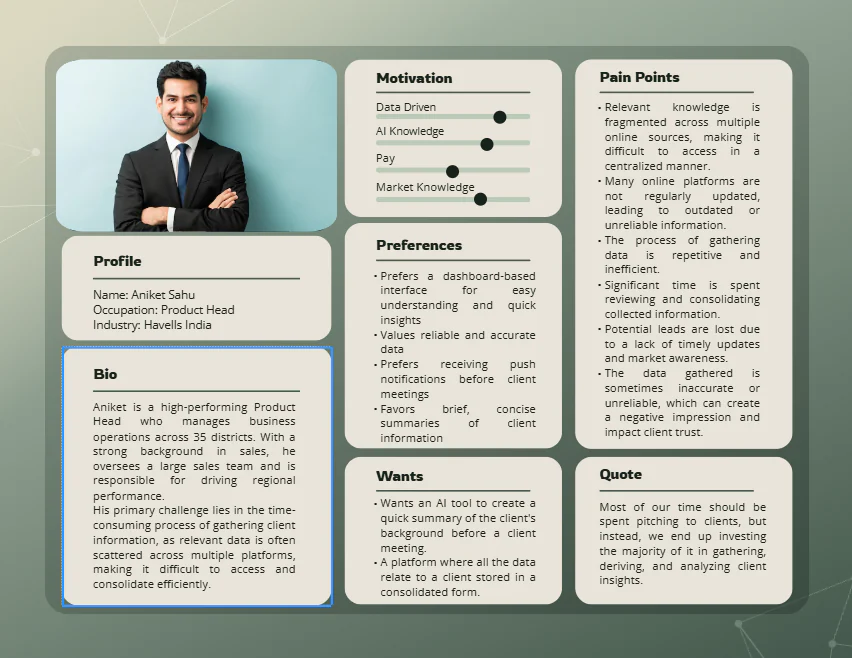
“Most of our time should be spent pitching to clients, but instead, we end up investing the majority of it in gathering, deriving, and analysing client insights.”
Slow synthesis weakened timing.
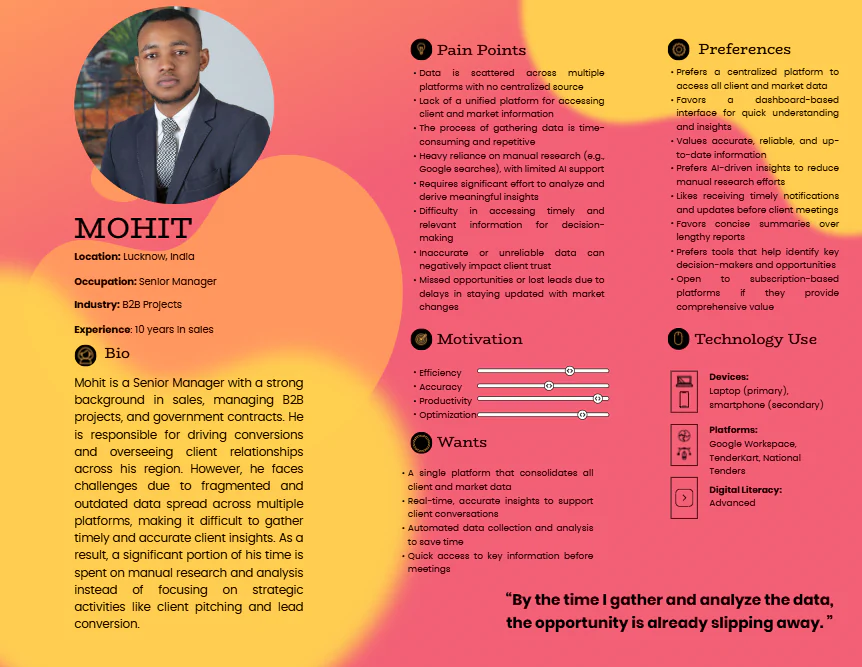
“By the time I gather and analyse the data, the opportunity is already slipping away.”
Research record: The project archive contains the interview guide, five participant recording sets, persona artifacts, a Phase 2 synthesis and one written meeting summary. Only two selected quotes are published; raw participant recordings remain private.
02
Problem
Sales professionals had access to information, but not a dependable path from scattered signals to a useful conversation.
REFINED PROBLEM STATEMENT
How might we give B2B sales teams a concise, meeting-specific brief without forcing them to research company, market, financial and stakeholder context across separate tools?
01Company sites
02LinkedIn
03News
04Finance
05CRM notes
PRIMARY USERS
Account executives, sales representatives, SDRs and business-development teams.
NEED
Relevant company, stakeholder, finance, risk and conversation context in one place.
CORE CONSTRAINT
Source reliability, API availability and synthesis quality—not information volume.
03
Decision
Two scope decisions kept the MVP focused on whether the brief itself was valuable.
DECISION 01 · INPUT
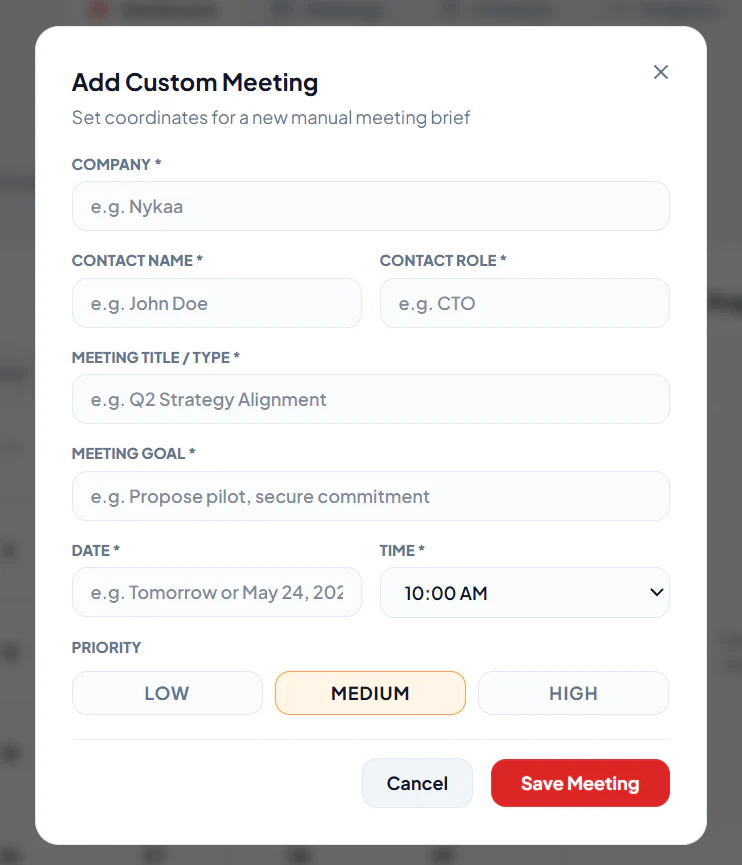
Validate the brief before integrating a CRM.
Salesforce or HubSpot integration required OAuth, field mapping, permissions and real CRM access. We chose manual meeting input stored in Supabase so we could test the full research-to-brief workflow first.
DECISION 02 · INTELLIGENCE
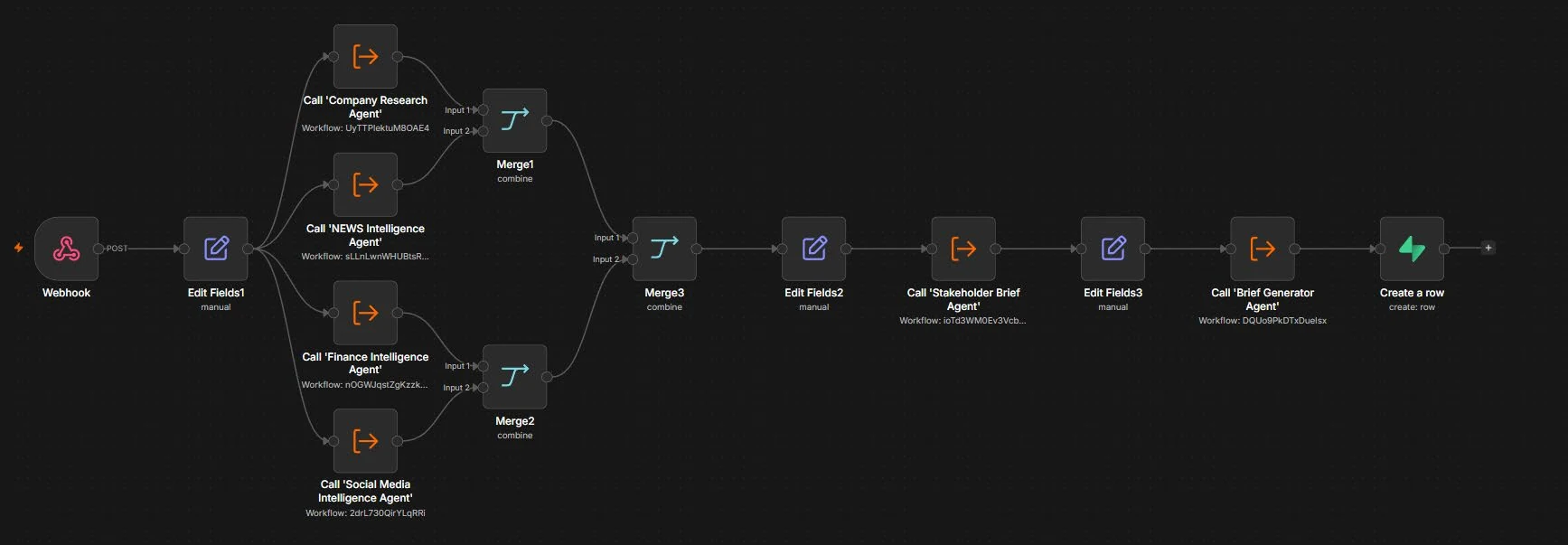
Specialist agents for research; one generator for synthesis.
Company, news, finance, social and stakeholder research have different structures and failure modes. Parallel agents kept each output inspectable; the final Brief Generator combined them into a consistent result.
Company agentNews agentFinance agentSocial agentStakeholder agentBrief Generator agentStructured meeting brief
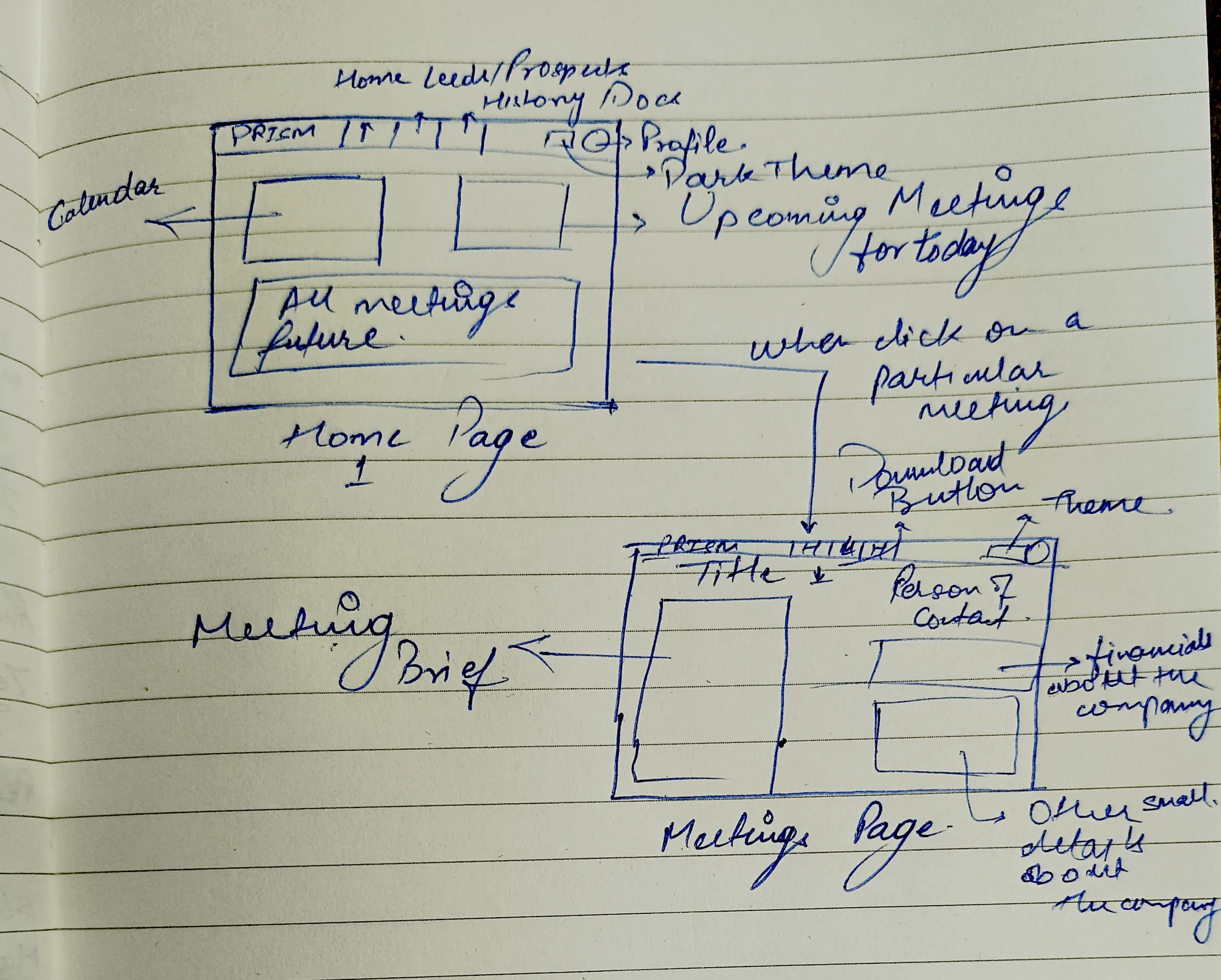
Manual meeting creation, multi-source research, structured brief, dashboard and PDF export.
Feedback and rating controls, production n8n deployment, alerts and better source checks.
CRM integration, post-meeting logging, deeper personalization and proactive intelligence.
04
Product
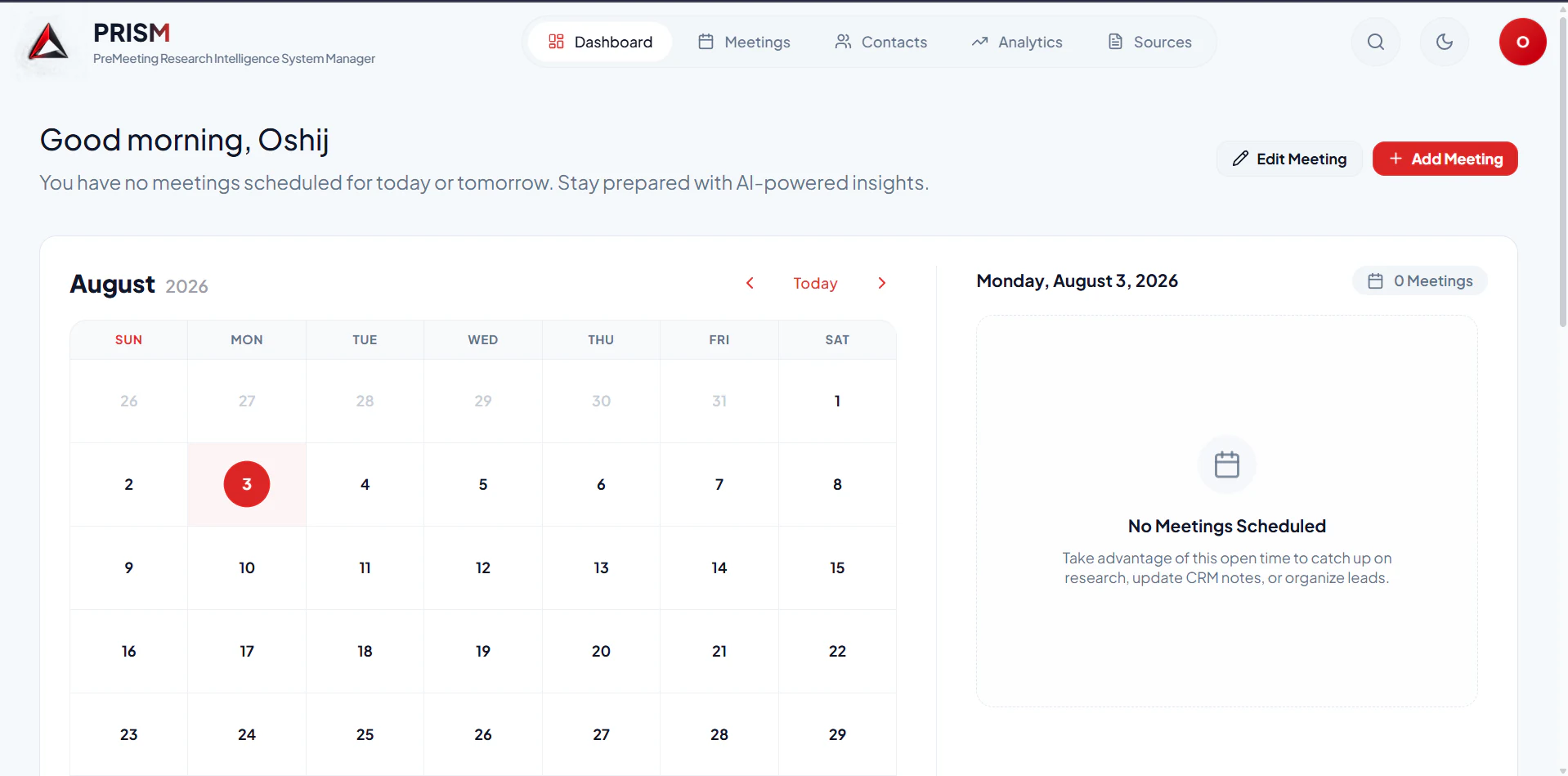
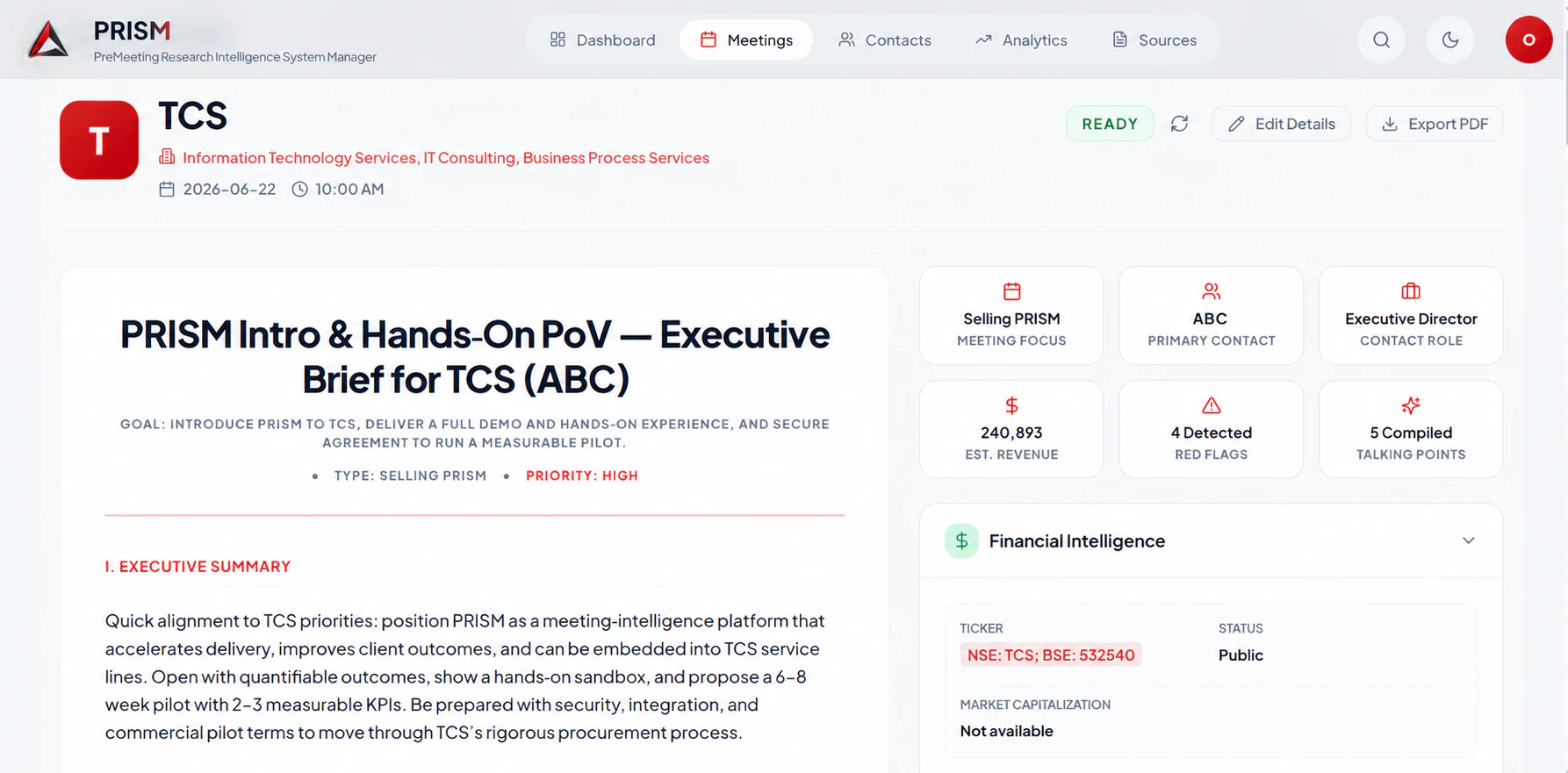
The working prototype turns one meeting input into a persistent, structured research brief.
01React interface
02Supabase
03n8n webhook
045 research agents
05Brief generator
06Dashboard
BUILT WITHReactTypeScriptTailwindSupabasen8nOpenAI APIsExternal data APIsVercel
— DOCUMENTS & EVIDENCE
Inspect the evidence behind PRISM.
The evidence pack is the recommended starting point: it maps the interview trail, decisions, delivery artifacts and built output without exposing participant recordings.
RECOMMENDED · CURATED EVIDENCEPRISM Evidence PackResearch · decisions · delivery · limitations
CASE-STUDY SOURCEPRISM Case StudyRead PDF
COURSEWORK · HYPOTHETICAL METRICSOriginal PRISM PRDCoursework artifact: Includes hypothetical commercial and success-metric assumptions—not validated business results.
05
Learning
The prototype worked end to end; the business impact still needs disciplined validation.
Evidence boundary: The prototype timing and interview-reported baseline were collected separately; this was not a controlled before-and-after productivity study.
Manual input removed the CRM dependency and allowed the complete workflow to generate structured briefs from representative company inputs.
Interview participants described fragmented preparation and expressed a preference for concise, actionable summaries over complex dashboards or raw information.
Repeated use could reduce preparation effort and improve consistency, but that requires observation across real meeting cycles.
Retention, team adoption, decision quality, productivity impact and sales outcomes. Source coverage, private-company data and hallucination controls also need stronger production testing.